Needle and Thread or a Fabric Patch?
Needle and thread or a fabric patch? Match the repair to the damage, fabric and finish you want, with clear choices for seams and worn cloth.
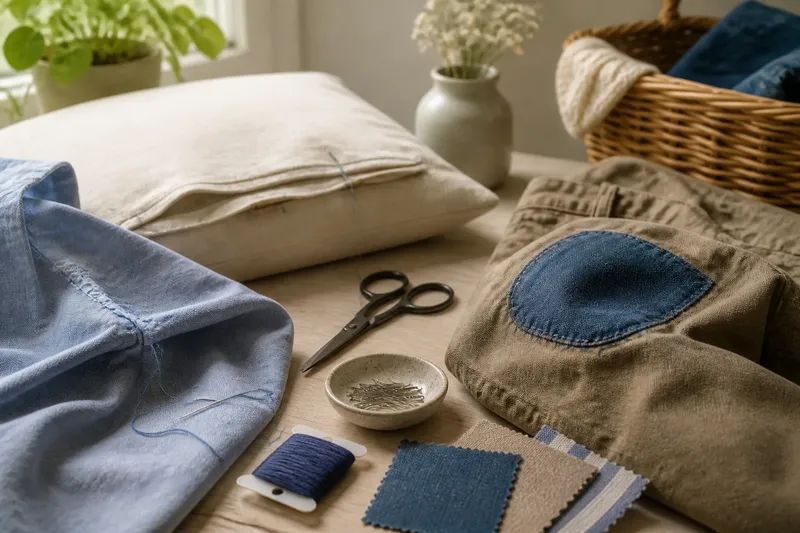
The common mistake with a torn garment is to reach for a patch before checking whether the fabric is simply coming apart at a seam. That can leave a stiff square where a quiet line of stitches would have restored the join; the reverse mistake, sewing a worn-through spot closed, can leave weak cloth carrying strain it can no longer bear. Needle and thread or a fabric patch is a choice about the kind of damage, not a contest between two universal fixes.
When is needle and thread enough?
Choose a hand-sewn seam repair when the fabric itself remains sound and the opening follows a seam, hem or other join. The thread has usually broken, or the edges have slipped apart, while the cloth beside them still has enough body to hold stitches.
Look closely at both sides of the opening. If you can bring the original edges together without stretching or bunching them, and the fabric does not crumble, split or show a thin, translucent track, a matching thread can usually reconnect the join. A needle, sharp fabric scissors and a few pins or clips may be all you need.
For a straight seam, turn the garment inside out and align the existing stitch line. Use small, even backstitches through both layers, beginning a little before the opening and ending a little beyond it. Secure the thread with a discreet finish on the inside. Avoid pulling so hard that the cloth puckers; the repaired seam should lie as naturally as its neighbours.
This approach suits a seam that has opened at the side of a shirt, along a pillow cover, or where a pocket bag has detached from its garment. It is less suitable when the gap has cut across the fabric away from a join, because stitching the raw edges together can shorten the area and leave a ridge or a new point of strain.
When does worn fabric need a patch?
Use a patch when the cloth itself is thin, frayed or missing. A patch spreads the load across healthier fabric around the damage; a line of thread alone would ask the fragile edges to hold each other.
Check the area around the hole, not just the hole itself. A worn knee may look like one small opening while the surrounding weave has already become soft and weak. If gentle handling makes that larger area distort, a tiny patch sewn only to the visible gap will not address the full damage. Choose a patch large enough to reach firm cloth beyond the weakened zone.
For a visible repair, a woven cotton patch can add a deliberate contrast. For a quieter finish, look for a fabric with a similar weight and surface, such as cotton twill for sturdy cotton trousers. A patch that is much heavier than the garment can pull at its edges; a very thin patch may not support a hard-wearing area.
Say you have a child’s cotton trouser knee with a hole and a broad, fuzzy ring of thinning fabric around it. You could trim only the loose threads, place a rounded cotton patch on the inside that extends into sound cloth, and sew around its edge with small stitches. The expected observable result is a covered hole with the load shared beyond the fragile centre, rather than a narrow seam closing the hole and puckering the worn ring.
How do you tell a seam opening from a tear?
Trace the damage with your eyes and fingers. A seam opening follows a constructed join: you can often see the original stitch holes and two intact edges waiting to meet. A tear crosses the body of the fabric, while abrasion may leave no clean edges at all.
Some damage combines these types. A pocket corner can pull away at its seam and split the cloth beside it. Re-sewing the seam may restore the join, but the adjacent split also needs support. Treat each part according to what has failed rather than forcing the whole area into one repair method.
Check how the garment moves. A repair near an elbow, knee, underarm or pocket opening will flex or bear weight; a repair on a loose lining may face little strain. On a high-movement area, a patch can spread support, while an intact seam may simply need its original line restored. If the cloth around either type of damage is brittle, extensively frayed or badly distorted, a tailor or textile repairer may be able to assess whether a durable repair is practical.
Which patch and stitching suit the fabric?
Choose patch material by weight, stretch and surface. Woven cotton suits many stable woven garments. Stretch jersey needs a patch with compatible give, or movement may pull the repair out of shape. Denim can take a sturdy woven patch, while delicate cloth usually needs a lighter touch and a patch that does not overwhelm it.
Thread should be strong enough for the cloth but not so thick that it cuts through it. All-purpose polyester thread is a common option for everyday woven garments; cotton thread may blend better with some cotton fabrics. A hand-sewing needle should pass through the layers without forcing or leaving conspicuous holes. If a needle snags repeatedly, choose a more suitable needle or a less dense part of the fabric rather than tugging it through.
For a patch sewn on the outside, a neat running stitch or backstitch can become part of the garment’s appearance. For an inside patch, small stitches around the perimeter keep the edge from lifting. A patch placed behind the damage can show through the opening; one placed over it covers the worn area more fully. Each produces a different finish, so decide whether you want the repair to read as a visible feature or recede into the cloth.
Fusible repair tape or iron-on patches can be convenient, but they are not appropriate for every fibre, coating or garment. Follow the care label and the product maker’s instructions for heat and placement; if the fabric cannot safely take the recommended treatment, use a sewn patch or ask a professional. Avoid treating adhesive as a substitute for sound cloth at the patch edge.
What do people ask before choosing a repair?
Can you sew a hole without a patch?
You can close a small, clean tear with stitches if the edges are strong enough to hold them and the area is not under heavy strain. If the surrounding cloth is thin or fraying, a patch gives the stitches a sounder area to anchor into.
Should a patch go inside or outside?
An inside patch keeps the repair less prominent and can support the damaged area from behind. An outside patch covers the worn cloth directly and makes the repair visible, which may suit sturdy workwear or a deliberate decorative finish.
Can a patch be used on a seam?
It can, but first decide whether the seam has opened while the adjacent fabric remains strong. Re-sewing an intact edge is usually less bulky; use a patch if the cloth beside the seam is also worn or torn.
When should you stop and ask a repairer?
Seek help if the garment is valuable, the fabric is delicate or coated, the damage is extensive, or you cannot tell whether the material will support stitches. A tailor or textile repairer can advise on a repair that suits the garment’s construction.
How can you make the repair look considered?
Before stitching, lay the garment flat and decide where you want the repair to sit when worn. Smooth wrinkles away from the damaged area, align any printed pattern if that matters, and check that the patch will not catch against a lining or press uncomfortably against the skin.
Use a thread colour that serves the finish you want. A close match makes uneven stitches less conspicuous; a contrasting colour makes each stitch part of the design. On a patterned garment, a colour drawn from one of the quieter parts of the print can look intentional without competing with it.
After sewing, turn the garment right side out and check how it hangs and bends. A seam repair should not pull the joined edges into a ridge. A patch should lie flat, with no loose edge likely to snag. If either repair feels tight, remove the affected stitches and reposition them rather than adding more thread to hold a strained shape.
For needle and thread or a fabric patch, the most useful final check is the cloth just outside the repair. If it is firm, a seam can often be rejoined cleanly; if it is worn, support the area with a patch that reaches sound fabric. That small inspection helps the visible finish follow the condition of the garment, instead of asking one repair method to solve every kind of damage.